Open Access Collective · Disability Inclusion Website Template · sample contentOpen editorGet this website
Skip to content
Open Access
StartASL & captionsBorrow gearWalk-throughsMeetupsWho we are
Book ASL or captions
Open Access
StartASL & captionsBorrow gearWalk-throughsMeetupsWho we are

2418 Atwood Ave, Madison, WI 53704

(555) 016-2200

hello@example.org

Book ASL or captions

ASL, CART and tactile interpreting

Book an interpreter or a live captioner.

Tell us the date and what you need. A coordinator emails within one working day with the names of the interpreters who said yes.

  • Free for disabled residents attending public events
  • Ten days' notice for most events, 48 hours for medical
  • Deaf and DeafBlind members choose their interpreters
  • Two interpreters for anything over 90 minutes

Prefer video phone? VP (555) 016-2201
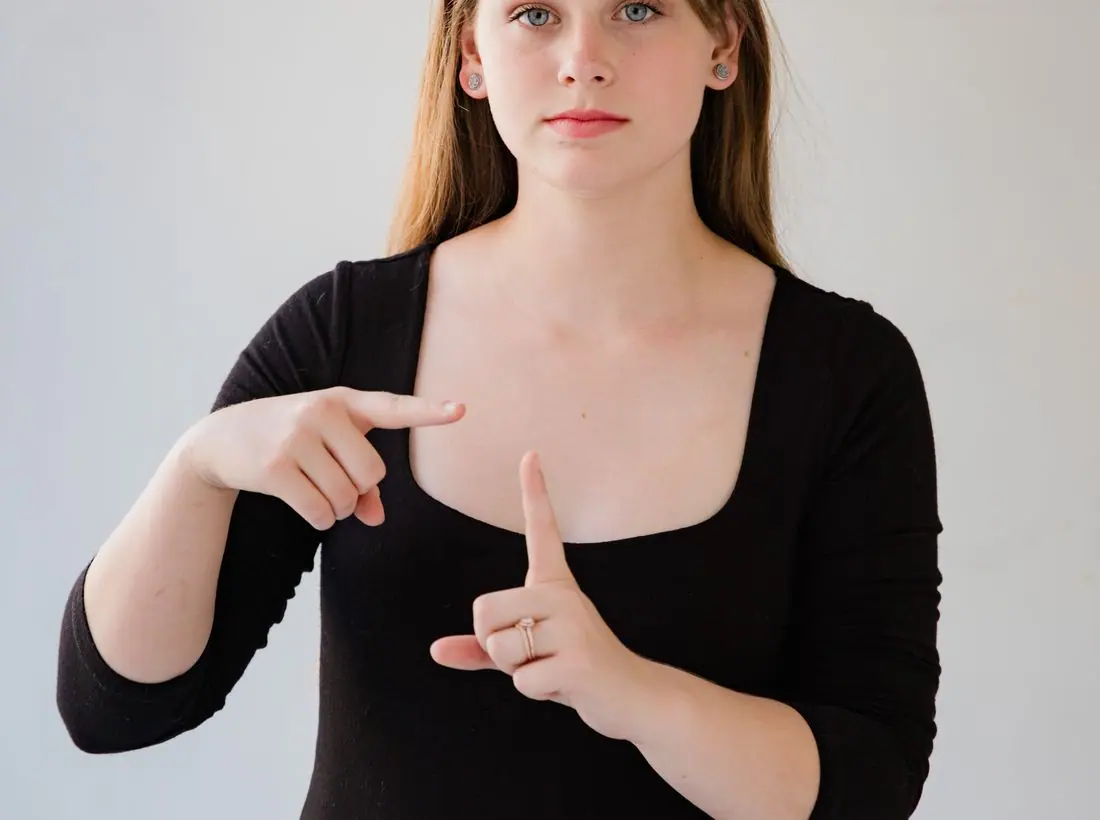
Young woman in a black top signing, facing the camera
Abby, on the roster since 2016, at the ASL coffee hour.

Booking request

What do you need?

Demo form. Nothing is sent.

Request received. .

A coordinator will email you within one working day. If the event is less than 48 hours away, call or VP us now.

How booking works

Three working days, usually

Most bookings are confirmed within three working days.

  1. 1

    Step 1: You tell us

    Use the form, email, call or VP. We need the date, place, length and who will be there.

  2. 2

    Step 2: Interpreters say yes

    We ask the roster in order of who the Deaf attendees prefer. You get their names along with the confirmation.

  3. 3

    Step 3: We send the prep pack

    Slides, song lyrics, speakers' names and anything read aloud go to the interpreter 48 hours ahead.

  4. 4

    Step 4: Afterwards, two questions

    Did it work? Would you book them again? Deaf attendees answer first, and their answers shape the roster.

Questions

Who pays, and other things people ask

Who pays for the interpreter?

If you are a disabled Madison or Dane County resident going to a public event, nobody: we cover it from donations. If you are an organization hosting the event, you pay the interpreter's rate of $65 an hour (two-hour minimum) and we add nothing on top.

Our church isn't covered by the ADA. Do we still need to do this?

Religious organizations are exempt from the ADA's public-accommodation rules. Deaf people still come to church. Our congregational rate is half price, and we can split a regular Sunday interpreter between two churches.

What is CART?

Communication Access Realtime Translation: a trained captioner types every word as it is spoken, shown on a screen or on the attendee's phone. It suits hard-of-hearing and late-deafened people who don't sign.

What if it's an emergency?

For medical appointments we can usually find someone within 48 hours. For a hospital emergency, the hospital must provide an interpreter by law. Ask for one, and call us if they say no.

Can I request a specific interpreter?

Yes, always. Write their name in the form. If they are not free, we will tell you who is before we confirm.

Downloads

Guides for event hosts

Large-print, screen-reader-tagged PDFs, plus plain text versions on request.

  • PDF

    Event access checklist

    Thirty things to check, from the parking lot to the slides, in the order you meet them.

    Events·Aug 2026·4 pages

    310 KBDownload
  • PDF

    Writing an access line for your flyer

    Six sample sentences that tell disabled people they are expected.

    Events·Aug 2026·1 page

    120 KBDownload
  • PDF

    Live captions on YouTube, Facebook and Zoom

    Step-by-step settings with screenshots, and where automatic captions fail.

    Captions·Sep 2026·8 pages

    1.1 MBDownload
  • PDF

    Working with an interpreter: a host's one-pager

    Where they stand, what to send ahead, and why you look at the Deaf person, not the interpreter.

    Interpreting·Jun 2026·1 page

    95 KBDownload

Nothing matches that search.

Open Access
  • Start
  • ASL & captions
  • Borrow gear
  • Walk-throughs
  • Meetups
  • Who we are

Disability-led since 2014. Step-free entrance, gender-neutral restroom and a quiet room at 2418 Atwood Ave. 2418 Atwood Ave, Madison, WI 53704 · (555) 016-2200

© 2026 Open Access CollectiveWebsite by Greater Purpose Web

Design notes

Why Open Access Collective looks the way it does

Open Access is a collective run by disabled people, so the website has to pass the test its own members would set. Everything here was decided by asking what a screen-reader user, a Deaf member on a phone and a person on their third migraine day this week would each need first.

Built for
Disabled residents of Madison and Dane County, and the churches, shops and venues that want to include them.
Navigation
Classic top bar. Logo left, pages right, one action. Familiar to every visitor.
Pages
Start, ASL & captions, Borrow gear, Walk-throughs, Meetups, Who we are
Hero
a short action form as the hero: the one thing most visitors came to do (request a ride, ask for help, register a child) can be done before they scroll, with reassurance beside it. Variants: a = headline, reassurance and a photo on the left with the form as a raised card on the right; b = a tall photo carrying the headline, with the form and reassurance on a plain panel beside it; c = headline beside a photo, then the form laid out as one horizontal booking bar; a short manifesto as the opener: four to six plain declarative lines set very large, one after another, followed by a small closing paragraph and one action. Variants: a = left-aligned lines each sitting on a full-width rule; b = lines stepping in like a staircase with accented lines in the link colour and no rules; c = right-aligned lines with a vertical rule and side label, accented lines underlined with a heavy stroke

Typography

The whole site is set in the Atkinson Hyperlegible family, which the Braille Institute commissioned so that letters low-vision readers confuse (I, l, 1; O, 0; b, d) are drawn deliberately different. The original cut sets the headlines, the newer Next cut sets 19px body text, and the Mono cut sets times and booking details. Using one family on purpose keeps the page calm and predictable.

Color

The blue and gold come from the Disability Pride Flag, deepened until the blue passes AAA against the page in both themes. The page is a faintly green off-white instead of pure white, which many people with light sensitivity and dyslexia find easier for long reading. The dark theme starts from the flag's charcoal and lightens the blue, so it is a separate palette and not an inversion.

Layout and navigation

A classic top bar with six plainly named pages, in the same place on every page, because predictable navigation matters more to keyboard and screen-reader users than novelty. Each page answers one job: booking, borrowing, walk-throughs, meetups, who runs it. Borders are two pixels and focus rings are thick, so the layout survives 200% zoom and high-contrast mode.

The hero

The opener is a short manifesto of five concrete promises set right-aligned against a vertical rule. Each line names something you could check on the day, like a step-free door, captions or a quiet room, so the hero states what the collective does without a slogan. The last line, Disabled-led, is the one underlined, because it is the reason the rest gets done properly.

Calls to action

The main button reads Book ASL or captions, because interpreter booking is the most time-sensitive thing people come here for: ten days' notice for most events. The secondary actions say exactly what happens next, like Borrow a ramp or Book a walk-through, so nobody has to guess where a button leads.

Photography

Photos show disabled people doing ordinary things together: signing across a table, playing wheelchair basketball, talking in a group. We avoided inspiration-style imagery, close-ups of mobility aids without people, and any photo where a disabled person is only being helped.

Accessibility

Body text is 19px with 1.6 line height and a 62-character measure. Every pairing meets WCAG AA and the main text pairings meet AAA. The template respects reduced-motion settings, gives every form field a visible label, and the plain-words summary on the home page follows the Easy Read habit of one idea per sentence.

Type system

  • DisplayAtkinson HyperlegibleAtkinson Hyperlegible was drawn for the Braille Institute so that letters which usually look alike (I, l and 1; O and 0; b and d) never get mistaken for one another by low-vision readers.
  • TextAtkinson Hyperlegible NextThe 2025 follow-up from the same studio keeps those distinctions but adds the middle weights and tighter spacing that long paragraphs need.
  • AccentAtkinson Hyperlegible MonoThe mono cut sets times, room names and booking codes, where every character has to be read correctly the first time.

Colour and contrast

Every text pairing is checked against WCAG 2.2 in both themes.

Light theme

PairingSampleRatioWCAG
Body text on pageAa16.29:1AAA
Body text on cardsAa17.85:1AAA
Secondary textAa5.94:1AA
LinksAa6.88:1AA
Button textAa7.54:1AAA
Accent label textAa9.62:1AAA
Text on dark bandsAa16.29:1AAA
Muted text on dark bandsAa8.43:1AAA
Text on brand bandsAa7.54:1AAA
Muted text on brand bandsAa5.03:1AA

Dark theme

PairingSampleRatioWCAG
Body text on pageAa16.1:1AAA
Body text on cardsAa14.44:1AAA
Secondary textAa7.1:1AAA
LinksAa10.01:1AAA
Button textAa10.36:1AAA
Accent label textAa12.5:1AAA
Text on dark bandsAa17.11:1AAA
Muted text on dark bandsAa8.6:1AAA
Text on brand bandsAa10.36:1AAA
Muted text on brand bandsAa5.98:1AA

Designed by Greater Purpose Web. Names, people and events are sample content.