Fri16Oct
Fairmount
Vigil companion, overnight
11 PM – 2 AMFairmount, 6 West
Sit with a patient who has no family nearby.
1 of 2 open
Volunteer
Our volunteers are retired teachers, nurses, a bus driver and a law student. What they share is the ability to be quiet in a hard room.
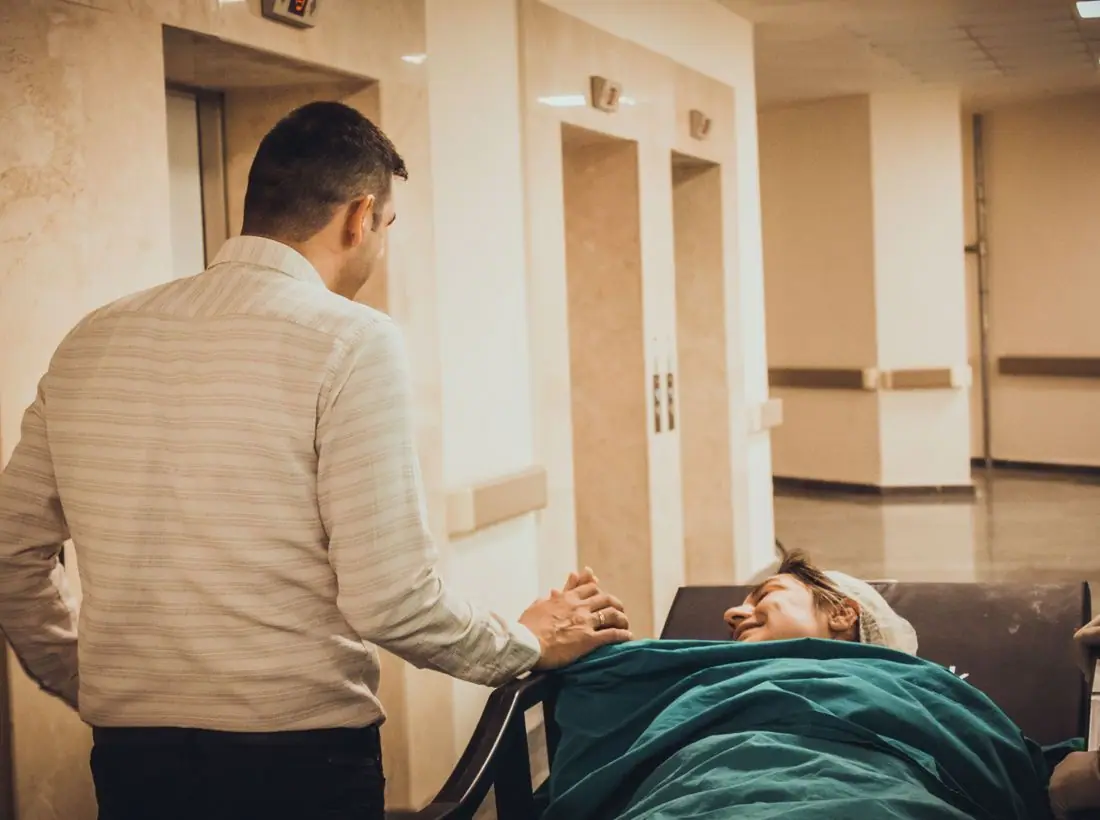
How to start
About three months, start to finish. Next training cohort begins in January.
Step 1 of 4
A short form, then an hour over coffee with Bridget. We'll ask about your own experience of loss, because it matters.
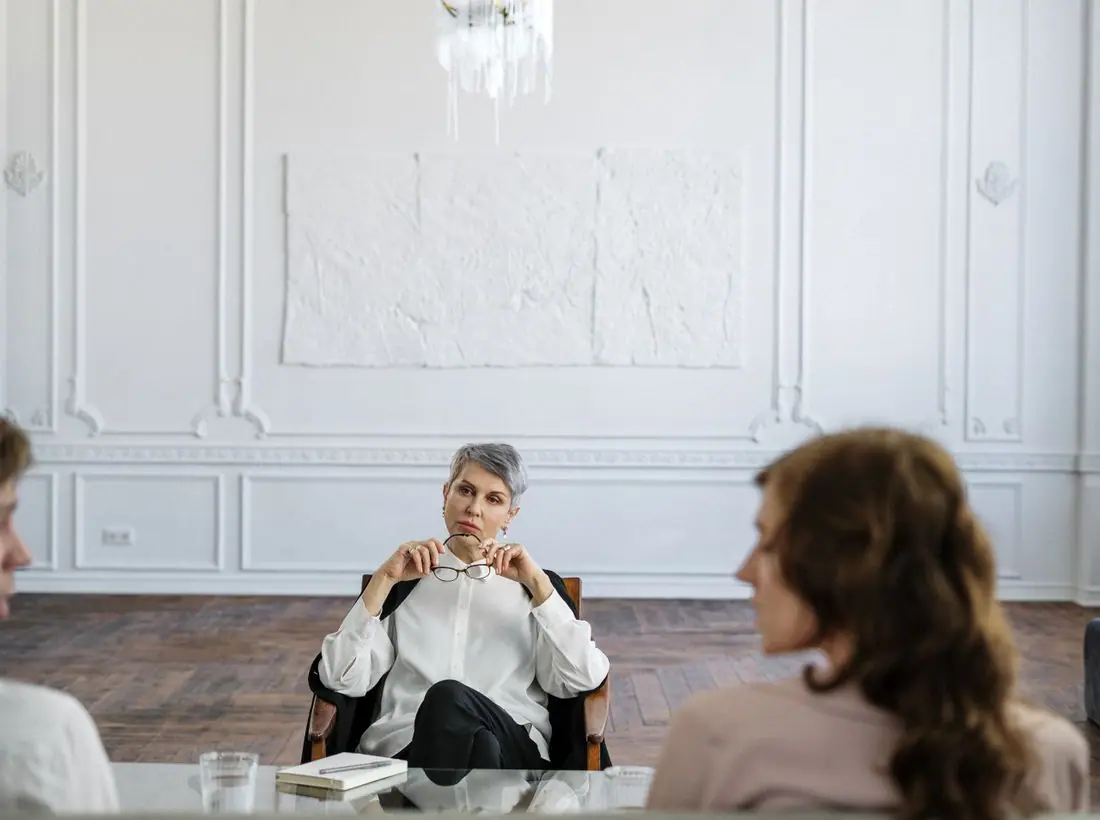
Step 2 of 4
Eight Saturday mornings: listening, prayer across traditions, dementia, death and dying, and looking after yourself.
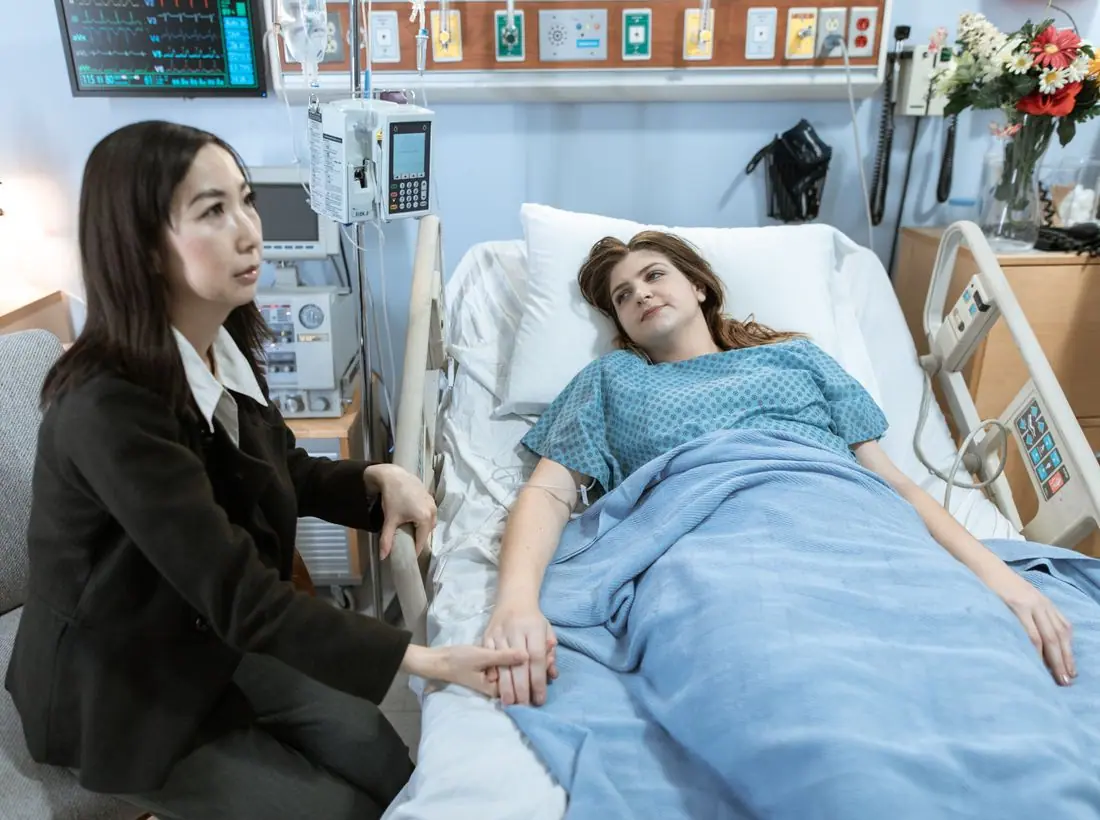
Step 3 of 4
Six visits and two vigils alongside an experienced chaplain before you go into a room alone.
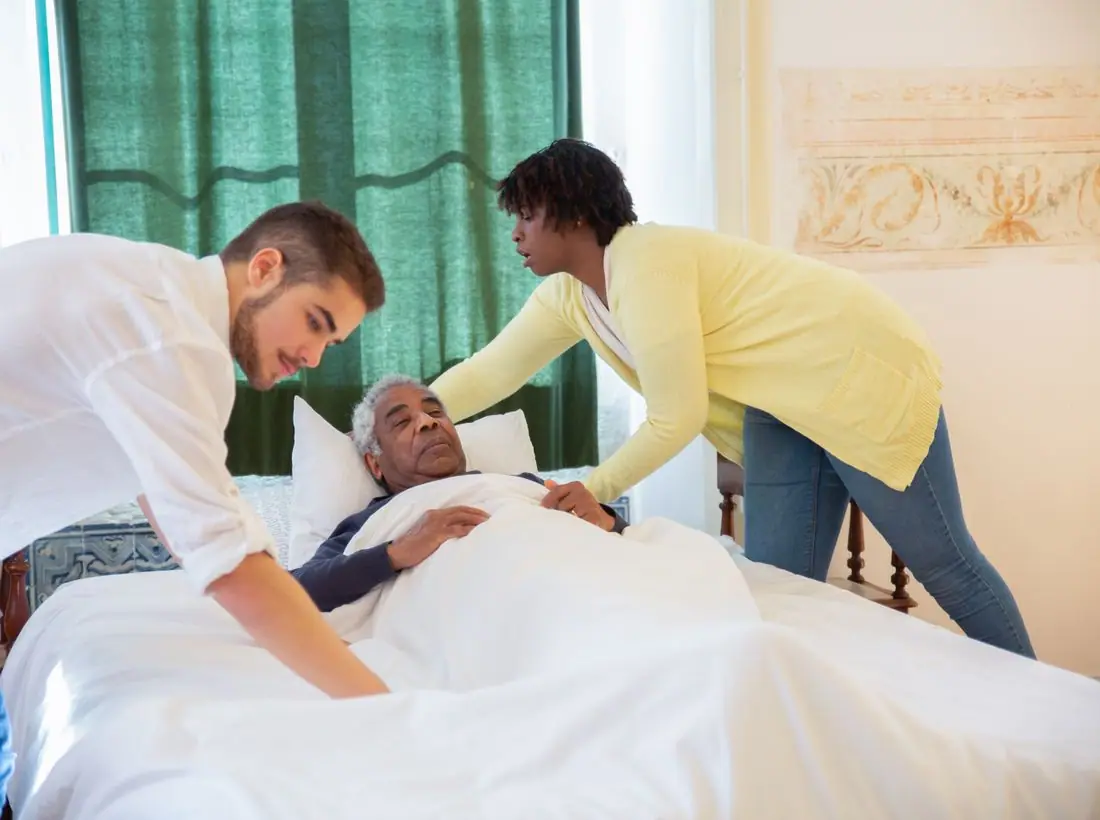
Step 4 of 4
Three or four hours, at one hospital. Most volunteers stay for years; you can step back at any time.
For trained volunteers
Already trained? Claim a shift. Your hospital lead will meet you at the chaplaincy office.
Fri16Oct
Fairmount
11 PM – 2 AMFairmount, 6 West
Sit with a patient who has no family nearby.
1 of 2 open
Sat17Oct
Erie Shore
2 – 6 PMErie Shore, ICU family lounge
Coffee, chargers and a listening ear for families.
2 of 2 open
Tue20Oct
Euclid Heights
7 – 9 PMEuclid Heights, NICU family room
Evening company for parents between feeds.
1 of 1 open
Sun15Nov
Fairmount
2 – 5 PMFairmount chapel
Greet families and help light the candles.
3 of 8 open
No shifts match. Try another hospital.
Demo board: taking a shift claims it on this page only.
Chaplains
Every staff chaplain is board-certified and has completed four units of clinical pastoral education.
Apply
Applications close November 30. Bridget will reply within a week.
A real person will reply within a day.
Design notes
Bedside Chaplains sends trained chaplains to patients, families and staff in six Cleveland hospitals, day and night. The site is built for someone standing in a corridor with a phone, and it lets them ask for a chaplain before they read anything else.
Petrona sets the headlines in a soft medium weight with a light italic for second lines; it has the warmth of a handwritten note without pretending to be one. The body is Atkinson Hyperlegible, designed by the Braille Institute, at 18px. Its letters are deliberately distinct (no confusing l, I and 1), which matters when the reader is exhausted or medicated.
The palette comes from the room at three in the morning: the pale green-gray of hospital linen, the deep teal of the privacy curtain and the amber of the one reading lamp left on. We avoided clinical white and alarm red entirely. The dark theme is a night shift rather than an inversion, with the teal lifted and the lamp-amber warmed so both stay clear against the dark.
A classic top bar, because nobody in a hospital should have to learn a navigation pattern. Six plainly named pages, a single action on the right and a phone number one tap away. The request form has its own anchor so nurses can text a family the link straight to it.
The home page opens with the request form itself. Most visitors arrive because someone is ill right now, so the form asks for five things and nothing more, while the reassurance beside it answers the questions people are too tired to ask: how long, how much, and will you try to convert my mother.
"Ask for a chaplain" is the main action because it is a request, not a booking. Every other action names exactly what happens: call the on-call chaplain, ask for a bedside vigil, join a grief group, start volunteer training. The giving action is "Fund a night shift", since nights are what donations actually pay for.
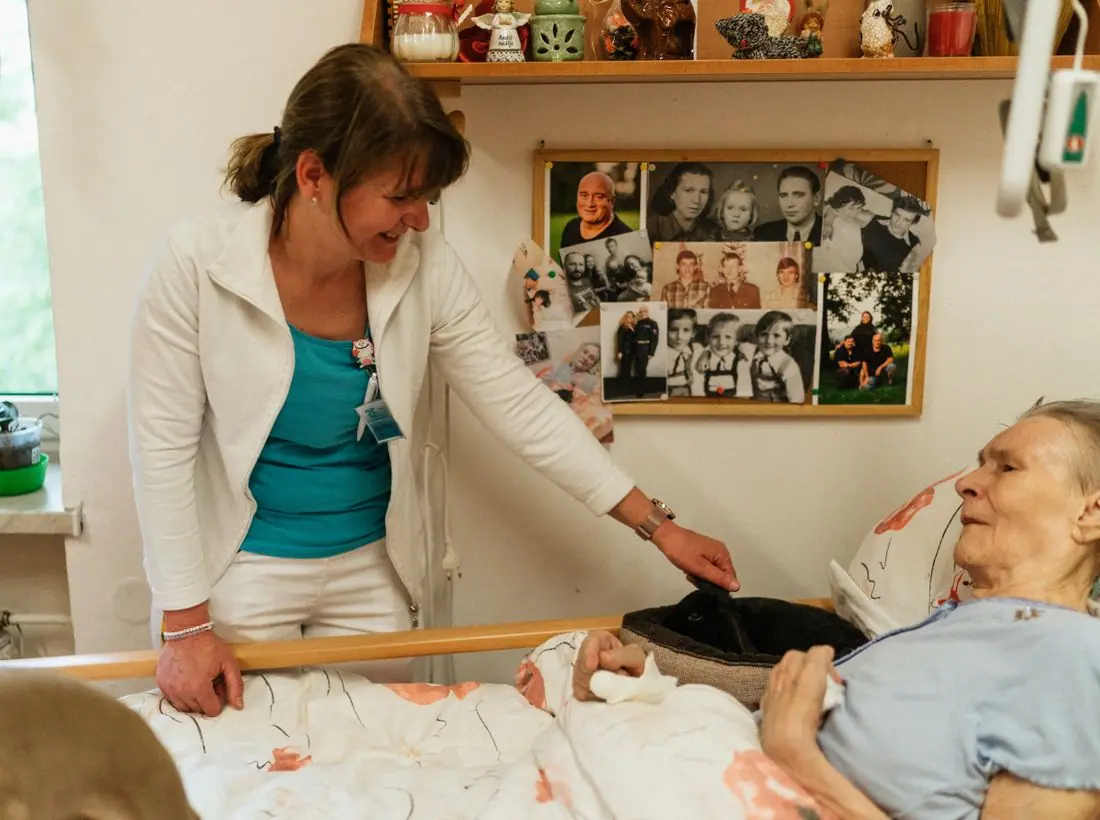
Only real bedside moments: hands held, a visitor in a chair, a lamp and candles. We left out stock photos of smiling clinicians and anything that looks like a hospital advertisement. Nobody in a photo is identifiable as a specific patient, and there are no photos of people at their most frail.
Large, high-contrast type, form fields with visible labels, and a phone number written out in full wherever a form appears, for people who would rather talk. Crisis numbers are in plain text, not hidden behind links. Both color themes keep body text above 7:1.
Every text pairing is checked against WCAG 2.2 in both themes.
| Pairing | Sample | Ratio | WCAG |
|---|---|---|---|
| Body text on page | Aa | 13.41:1 | AAA |
| Body text on cards | Aa | 14.97:1 | AAA |
| Secondary text | Aa | 5.64:1 | AA |
| Links | Aa | 6.75:1 | AA |
| Button text | Aa | 7.54:1 | AAA |
| Accent label text | Aa | 4.8:1 | AA |
| Text on dark bands | Aa | 13.41:1 | AAA |
| Muted text on dark bands | Aa | 7.29:1 | AAA |
| Text on brand bands | Aa | 7.54:1 | AAA |
| Muted text on brand bands | Aa | 5.07:1 | AA |
| Pairing | Sample | Ratio | WCAG |
|---|---|---|---|
| Body text on page | Aa | 15.01:1 | AAA |
| Body text on cards | Aa | 13.31:1 | AAA |
| Secondary text | Aa | 6.72:1 | AA |
| Links | Aa | 9.07:1 | AAA |
| Button text | Aa | 9.44:1 | AAA |
| Accent label text | Aa | 8.79:1 | AAA |
| Text on dark bands | Aa | 16.06:1 | AAA |
| Muted text on dark bands | Aa | 8.12:1 | AAA |
| Text on brand bands | Aa | 9.44:1 | AAA |
| Muted text on brand bands | Aa | 5.66:1 | AA |
Designed by Greater Purpose Web. Names, people and events are sample content.