Seedline Network · Church Planting Network Website Template · sample contentOpen editorGet this website
Skip to content
Seedline
HomeBecome a planterThe churchesSending churchesCoaches & staffField notes

On this page

    Book a discovery call
    Seedline
    HomeBecome a planterThe churchesSending churchesCoaches & staffField notes

    2817 Welton St, 2nd floor, Denver, CO 80205

    (555) 016-4410

    hello@example.org

    Book a discovery call

    Become a planter

    Most of the planters we fund didn't think they were planters


    They were bivocational youth pastors, nurses who led a home group, a retired Air Force chaplain. If you keep noticing the same streets and the same people, that is worth a conversation.

    Discovery calls run Tuesday and Thursday, 8 AM to 4 PM Mountain time.

    Who tends to thrive

    What we look for, honestly

    We look for people who already live in, or will move to, the neighborhood they hope to plant in, and who plan to stay at least ten years. We look for married couples who both want this, since the residency and the first three years ask a great deal of a household. We are glad to work with bivocational planters; about half of ours keep a second job for the first five years.

    You do not need a seminary degree, though many of our planters have one. You do need to be part of a church now, with a pastor who will tell us the truth about you. We work with churches from nine denominations and a handful of none, and we ask every planter to sign a short, historic statement of faith.

    Read our convictions

    Spanish-language planters train in a parallel cohort led by Rosa Villaseñor.

    The pathway in detail

    Four stages, each with a way out

    At the end of every stage you and your coach decide together whether to go on. About a third of people who book a discovery call end up planting, and we count the other two-thirds as a good outcome too.

    1. 1

      Step 1 of 4

      Discovery call · 45 minutes

      We talk about where you live, who you already know there, and how your household is doing. You leave with an honest sense of whether assessment makes sense this year.

      Discovery call · 45 minutes
    2. 2

      Step 2 of 4

      Assessment weekend · 3 days

      Twice a year at Park Hill. Interviews, a practice talk, a neighborhood walk and long meals. Spouses are assessed alongside, never as an afterthought. Costs are covered by the network.

      Assessment weekend · 3 days
    3. 3

      Step 3 of 4

      Residency · 10 months

      Twelve hours a week inside a Seedline church, a Wednesday teaching lab, and six hours a week of simply being present on your own streets. The stipend is $1,800 a month.
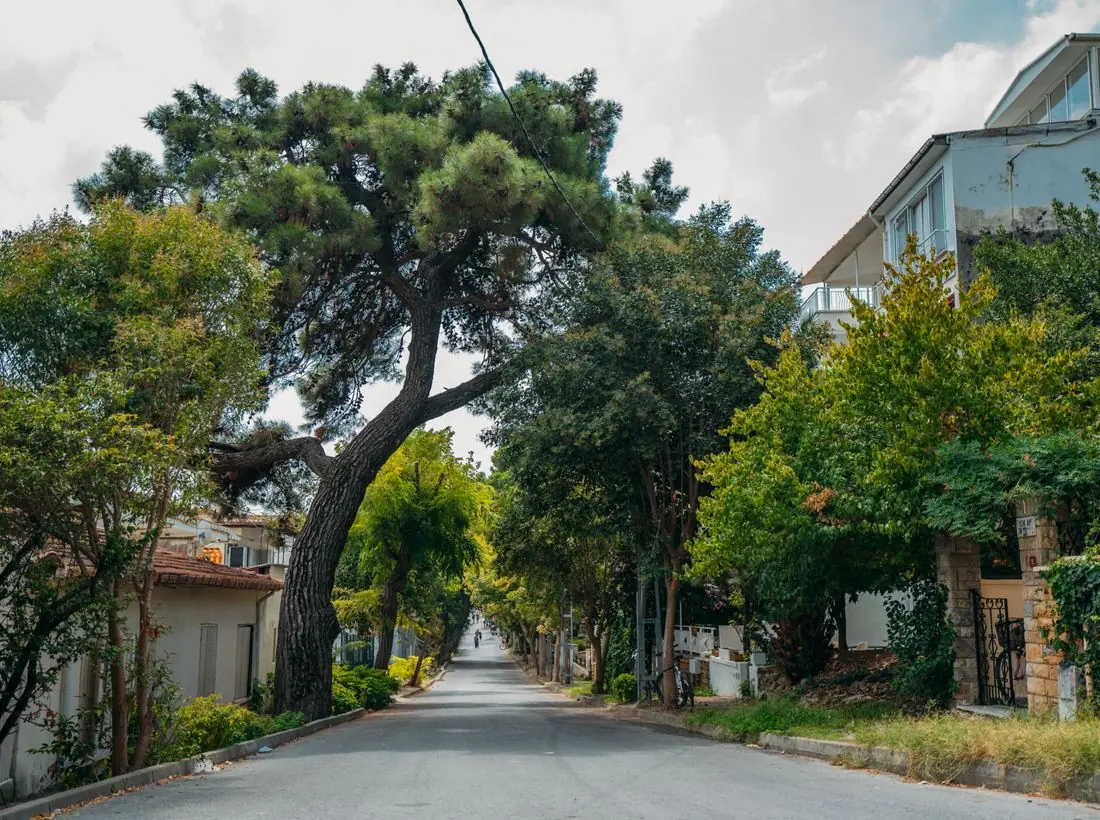
      Residency · 10 months
    4. 4

      Step 4 of 4

      Launch and coaching · 7 years

      Your first public Sunday happens when your coach agrees you have a core of at least twenty-five adults. After that, a coach every other week for three years and a peer cohort for seven.

      Launch and coaching · 7 years

    A residency week

    What twelve hours a week looks like

    Residents keep their day jobs where they need to. This is a typical week for a resident planting in Montbello in the 2025–26 cohort.

    ActivityMonTueWedThuSatSun
    Planters' huddleWelton St office7:30–9:00 AM·····
    Neighborhood hoursYour own streets·4:00–7:00 PM·4:00–7:00 PM··
    Teaching labPark Hill··1:00–4:00 PM···
    Coaching callVideo···8:00–9:00 PM··
    Serve in host churchMontbello Fellowship·····9:30 AM–12:30 PM
    Household sabbathHome····All day·
    • Cohort
    • Presence
    • Training
    • Coaching
    • Host church
    • Rest

    Questions

    What planters usually ask first

    Do I have to move?

    Only if you don't already live where you want to plant. Most of our planters plant within two miles of where they were living when they first called us.

    How is the money arranged?

    Residents receive $1,800 a month for ten months. After launch, churches get a declining rent and salary grant over three years: 60 percent of the planter's agreed salary in year one, 40 in year two and 20 in year three. Sending churches usually share the cost.

    What if the assessment says not now?

    Then you get a written explanation and a coach for six months anyway. Nine of our current planters were told 'not yet' the first time.

    Can I plant outside Denver?

    Yes, anywhere from Fort Collins to Pueblo. Three Seedline churches are in Larimer and Weld counties, and the northern cohort meets in Loveland.

    Is there a Spanish-language track?

    Yes. Rosa Villaseñor leads a parallel cohort with assessment, residency and coaching entirely in Spanish. Two of our fourteen churches worship mainly in Spanish.

    What does my spouse have to do?

    Nothing on a job description. We do assess together, include spouses in the cohort retreats, and pay for a counselor of your choosing for up to twelve sessions a year.

    Discovery call

    Book forty-five minutes with Lena or Rosa

    Pick a time that works and we'll send a video link, or come to the Welton Street office if you'd rather talk in person.

    Cappuccino beside a laptop on a rustic table
    Most calls happen on video. Some happen at the corner table at our office.

    Request a discovery call

    Preferred language

    Demo form. Nothing is sent.

    Thank you, .

    Lena or Rosa will email you within two working days with a few times to choose from.

    • No application, no fee, no commitment
    • Spouses welcome on the call
    • Spanish or English
    • We reply within two working days

    Rather call? (555) 016-4410

    We would rather see four hundred churches of forty people than four churches of four thousand.

    Seedline
    • Home
    • Become a planter
    • The churches
    • Sending churches
    • Coaches & staff
    • Field notes
    • 2817 Welton St, 2nd floor, Denver, CO 80205
    • (555) 016-4410
    • hello@example.org
    © 2026 Seedline NetworkWebsite by Greater Purpose Web

    Design notes

    Why Seedline Network looks the way it does

    Seedline is a network that recruits, trains, pays and coaches church planters along the Front Range. Its visitors are mostly pastors weighing a decision that will shape a decade of their family's life, so the site reads like a careful report rather than a recruitment poster.

    Built for
    Prospective planters and their spouses, pastors of established churches thinking about sending someone, and individual donors who fund residencies.
    Navigation
    Contents column. A right-hand contents list tracks where you are on long pages, the way a well-made book or report does.
    Pages
    Home, Become a planter, The churches, Sending churches, Coaches & staff, Field notes
    Hero
    a short action form as the hero: the one thing most visitors came to do (request a ride, ask for help, register a child) can be done before they scroll, with reassurance beside it. Variants: a = headline, reassurance and a photo on the left with the form as a raised card on the right; b = a tall photo carrying the headline, with the form and reassurance on a plain panel beside it; c = headline beside a photo, then the form laid out as one horizontal booking bar; a short manifesto as the opener: four to six plain declarative lines set very large, one after another, followed by a small closing paragraph and one action. Variants: a = left-aligned lines each sitting on a full-width rule; b = lines stepping in like a staircase with accented lines in the link colour and no rules; c = right-aligned lines with a vertical rule and side label, accented lines underlined with a heavy stroke

    Typography

    Instrument Sans carries the headlines: a plain, slightly narrow grotesque that looks organized without looking corporate. Newsreader sets the long text at 18px because planters read these pages properly, often twice, and often with a spouse. DM Mono handles labels and figures, borrowing the look of a surveyor's field book, which suits a network that literally maps neighborhoods.

    Color

    The ground is a pale granite gray taken from the boulders at Red Rocks, the brand color is the dark green of Front Range spruce, and the single accent is the gold of the aspens on Kenosha Pass in late September. The dark theme is a deep forest night rather than an inversion, with the green lifted to a pale sage so it still reads as the same organization.

    Layout and navigation

    Pages here are long and get read, so a contents column on the right tracks where you are, the way a good report does. The discovery-call button sits permanently at the foot of that column, so the one action that matters is always a glance away without shouting.

    The hero

    The home page opens with five plain sentences stepping down the page: fourteen churches, eleven neighborhoods, no buildings. Planters are weary of grand vision language; facts about what has actually been planted are more persuasive and more honest. The figures and the four-stage pathway follow immediately.

    Calls to action

    The main action is "Book a discovery call" because that is honestly the first step: forty-five minutes, no commitment. Sending churches get their own verb, "Become a sending church", and the giving link stays quiet in ghost style, because donors who arrive here have usually already been asked in person.

    Photography

    No stage lights and no crowds. The photographs are living rooms, long tables, a theater lobby and a rec-center hall, because those are the rooms Seedline churches meet in, and a would-be planter needs to picture a church of thirty-five rather than three thousand.

    Accessibility

    Body text is 18px with a 64-character measure. Every color pair passes WCAG AA in both themes, and the spruce-on-granite headline pair passes AAA. The contents column collapses on phones so nothing competes with the text, and every form field has a visible label.

    Type system

    • DisplayInstrument SansA plain, slightly condensed grotesque with the tidy confidence of a field survey or a well-run grant report, which is what a network asking pastors to trust it with seven years should look like.
    • TextNewsreaderA text serif drawn for long reading on screens; planters read this site the way they read a commentary, slowly and more than once.
    • AccentDM MonoMono for the labels, dates and figures, like the notes in a surveyor's field book.

    Colour and contrast

    Every text pairing is checked against WCAG 2.2 in both themes.

    Light theme

    PairingSampleRatioWCAG
    Body text on pageAa14.78:1AAA
    Body text on cardsAa16.34:1AAA
    Secondary textAa5.94:1AA
    LinksAa8.46:1AAA
    Button textAa9.95:1AAA
    Accent label textAa7.64:1AAA
    Text on dark bandsAa14.78:1AAA
    Muted text on dark bandsAa7.78:1AAA
    Text on brand bandsAa9.95:1AAA
    Muted text on brand bandsAa6.42:1AA

    Dark theme

    PairingSampleRatioWCAG
    Body text on pageAa15.18:1AAA
    Body text on cardsAa13.73:1AAA
    Secondary textAa6.75:1AA
    LinksAa9.23:1AAA
    Button textAa9.55:1AAA
    Accent label textAa9.75:1AAA
    Text on dark bandsAa16.14:1AAA
    Muted text on dark bandsAa8.15:1AAA
    Text on brand bandsAa9.55:1AAA
    Muted text on brand bandsAa5.67:1AA

    Designed by Greater Purpose Web. Names, people and events are sample content.